Human papillomavirus (HPV)
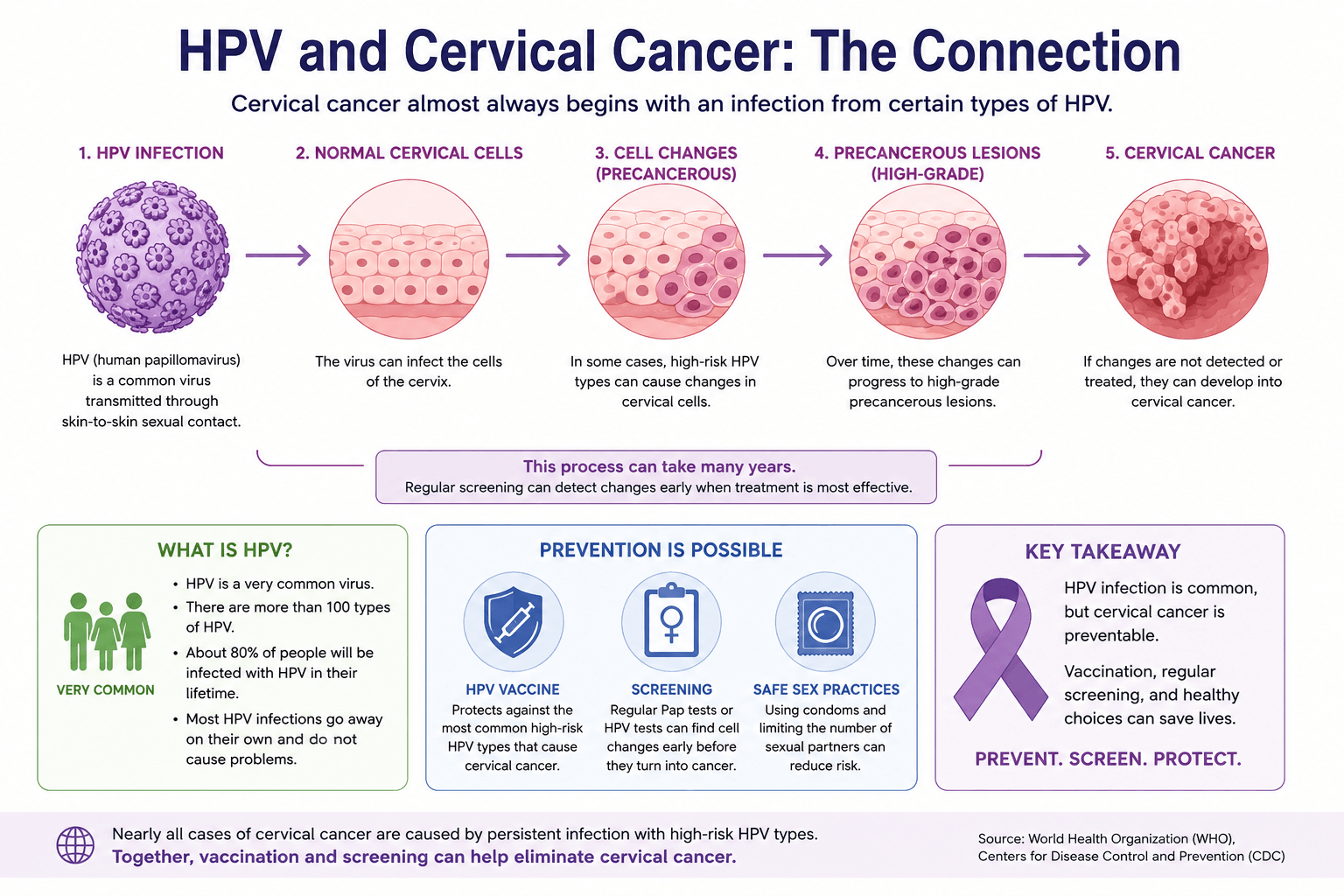
Human papillomavirus (HPV) is a very common virus that is transmitted through skin-to-skin sexual contact, and most sexually active individuals will be exposed to it at some point in their lives. While many HPV infections clear naturally without causing harm, certain high-risk types of the virus can persist and lead to changes in cervical cells that may develop into cancer over time. While HPV is the primary cause of cervical cancer, persistent HPV infection is also linked to other cancers, including anal, penile, throat, and vaginal cancers. Increasing awareness about HPV, promoting safe sexual health practices, and encouraging routine cervical screening are essential steps in reducing the spread and long-term impact of HPV-related diseases.
Cervical Cancer
Cervical Cancer remains one of the leading causes of cancer-related deaths among women worldwide, particularly in low- and middle-income countries where access to screening and treatment is limited. Each year, hundreds of thousands of women are diagnosed with cervical cancer, and many cases are detected at advanced stages when treatment options are less effective. Despite being largely preventable, cervical cancer continues to place a major burden on families, healthcare systems, and economies. Early detection through regular screening and timely treatment can significantly reduce mortality, yet many women still face barriers such as a lack of awareness, stigma, and limited healthcare access.
HPV vaccine
The HPV vaccine is a safe and effective tool for preventing cervical cancer and other HPV-related diseases. The vaccine works by protecting individuals against the most common high-risk HPV types responsible for the majority of cervical cancer cases. Health organisations around the world recommend HPV vaccination for girls and boys, ideally before exposure to the virus during adolescence. Studies have shown that countries with strong HPV vaccination programs have seen significant reductions in HPV infections, precancerous cervical lesions, and cervical cancer rates. Expanding access to HPV vaccination, alongside education and screening programs, has the potential to eliminate cervical cancer as a public health problem for future generations.